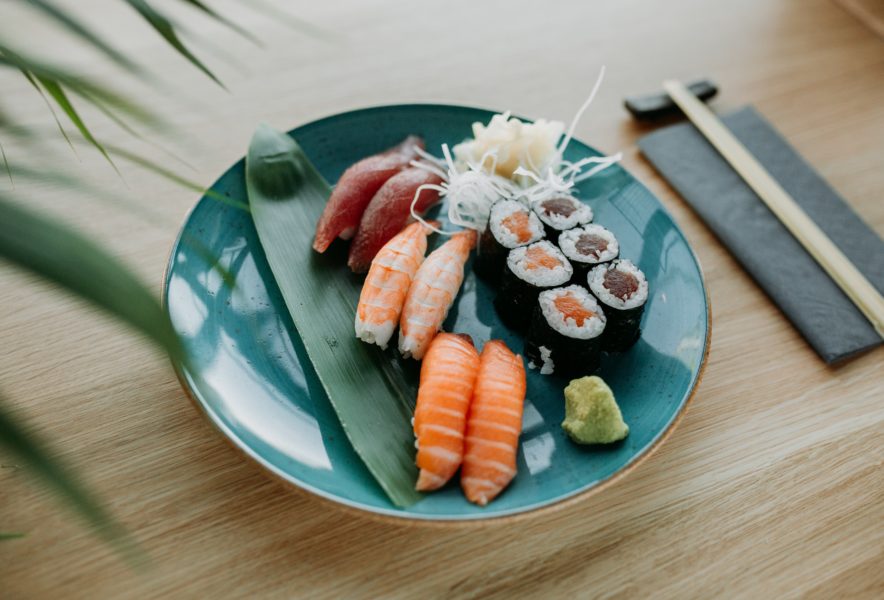
What do you think of when you think of delicious Japanese food? Tempura, soba, ramen, and many others, but sushi probably comes to mind for most people.
I was once asked by a foreign friend, “Japanese people eat sushi every day, don’t they? I envy you! I was once told, “You Japanese eat sushi every day, don’t you? I wonder if the image of Japanese people overseas is that they eat sushi every day. I love sushi too, but in reality, I don’t eat sushi every day, and none of my friends around me eat sushi every day either. I also have many friends who prefer meat to fish.
So how much sushi do Japanese people actually eat?
History of Sushi
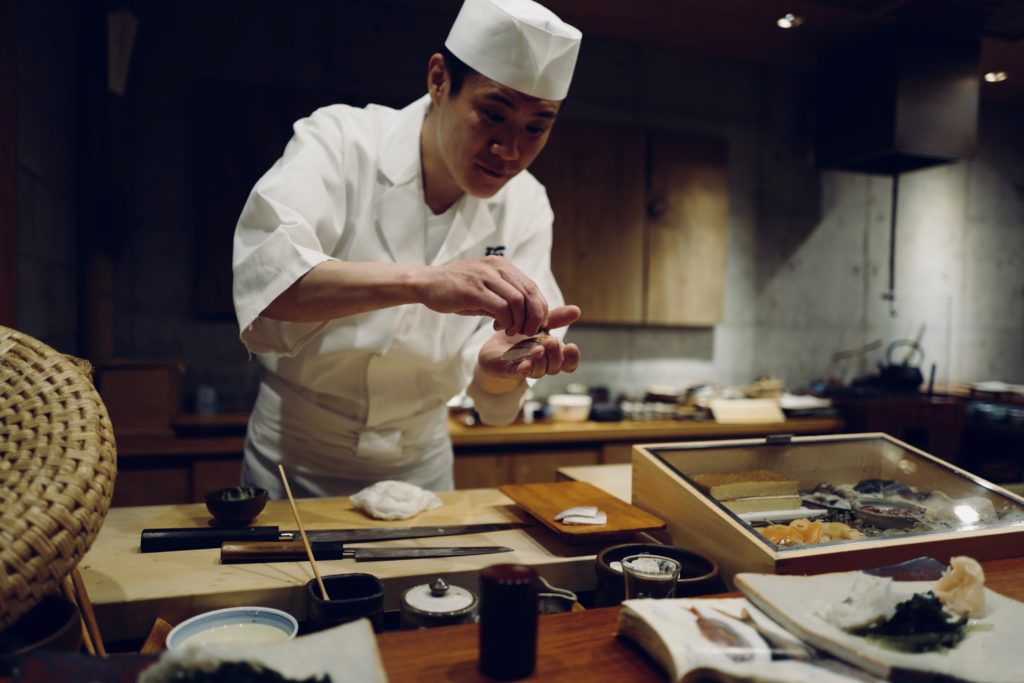
Everyone loves sushi, but how long has this food culture been around?
It is said that sushi was born in the early 1700s during the mid-Edo period. At that time, sushi was called “Hayazushi” and consisted of rice seasoned with vinegar and salt. Later, “hako zushi,” “makizushi,” “bobozushi,” and other types of sushi that we know today began to be made. Hakozushi was popular at that time.
Today, the word “sushi” often refers to nigirizushi, but when was nigirizushi born? It is said that it was born in the town of Edo in the early 1800s during the late Edo period.
At that time, nigirizushi was made with ingredients prepared from fish and shellfish caught in the Edo area, and sushi rice seasoned with vinegar and salt. The appearance of sushi back then was almost the same as today, but it was two to three times the size of today’s sushi.
Nigiri-zushi at that time was loved as a fast food. Since that time, many Japanese were diligent workers who saved time, and it spread quickly because it was possible to have a delicious meal that came out quickly even if you were busy.
In addition, conveyor-belt sushi originated in Osaka in the postwar period. In 1947, a prosperous sushi restaurant in Osaka came up with the idea to solve a shortage of human resources. They placed sushi on an improved conveyor and served it to the public, which was well received by the general public. The reason for the popularity was not only the fun of the spinning sushi plates, but also the low price. At that time, sushi restaurants only offered sushi at market value, and many of them did not know how much they would be paying. Even today, there are some high-end sushi restaurants that set their prices that way, but it is not relaxing to dine at a restaurant where you do not know how much you will be paying. Conveyor-belt sushi became popular because it dispelled such concerns and because it was interesting to look at, and the number of conveyor-belt sushi restaurants increased nationwide. Nowadays, not only sushi, but also ramen noodles and desserts are served. The method of serving conveyor-belt sushi continues to change due to hygiene considerations and other factors.
How many sushi restaurants are there in Japan?

Sushi is a favorite of both Japanese and foreign tourists, but how many sushi restaurants are there in Japan? According to a survey conducted by the Ministry of Health, Labor and Welfare (MHLW) some time ago, the number of sushi restaurants in Japan in 2018 was 24,069, of which 14,361 (59.7%) were “individual” and 9,708 (40.3%) were “corporate” establishments. 1
Most privately owned sushi restaurants are where you sit at a counter and enjoy sushi made by the owner right in front of you. Corporate sushi restaurants include many restaurants with a conveyor-belt style of sushi. The conveyor-belt sushi industry has continued to grow in both sales and number of stores as a result of the post-2020 Corona disaster and the aggressive adoption of non-contact needs such as delivery lane facilities and digitization of orders.
Including conveyor-belt sushi for casual dining, sushi restaurants can be found throughout the city. With so many sushi restaurants, you can certainly eat sushi every day. It is understandable that foreign sushi lovers are very envious of this environment.
However, when you go to a conveyor-belt sushi restaurant in Japan, you will notice that many of them are from overseas. It seems that the growth of the conveyor-belt sushi industry is more influenced by the increase in the number of foreign tourists than by the amount of sushi consumed by Japanese people.
*1: Ministry of Health, Labor and Welfare: https://www.mhlw.go.jp/content/10601000/000453598.pdf
How much seafood is consumed in Japan?
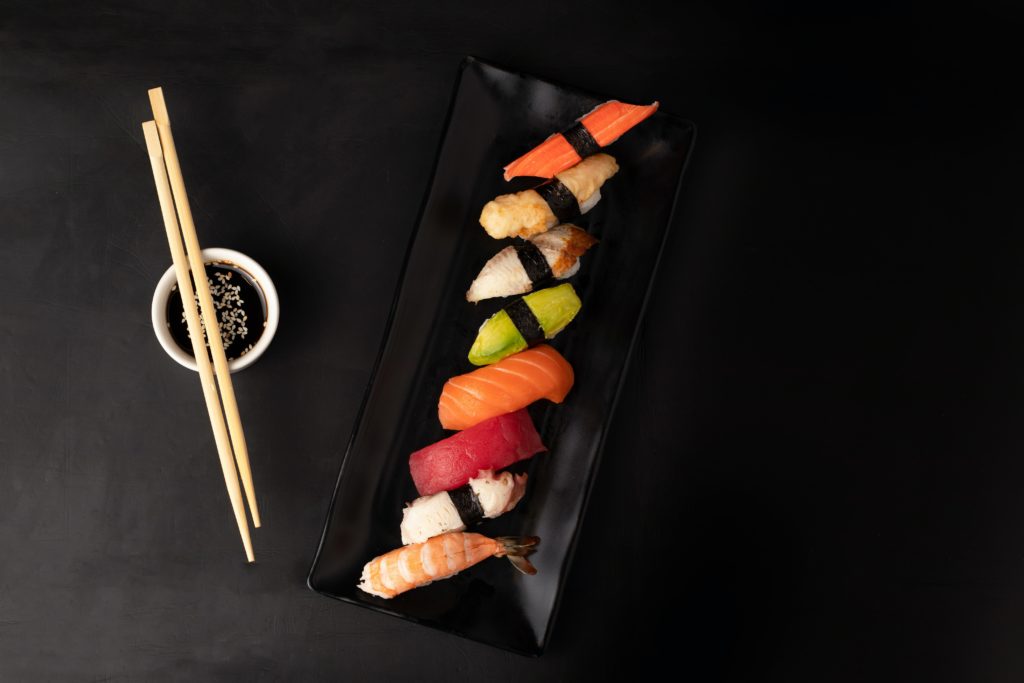
Japan has so many sushi restaurants, but how much fish do Japanese people eat? If they eat sushi every day, their consumption must be very high.
According to data from the Ministry of Agriculture, Forestry and Fisheries*2, the amount of fish and shellfish consumed by Japanese people in a year was 40.2 kg per person in 2001. In fact, the amount of seafood consumed by the Japanese peaked in that year and has been on a gradual downward trend ever since, falling to 23.4 kg in FY2020. In a diet with fish as the main dish, fish is said to amount to 80-100g per meal. From this point of view, simple calculations indicate that 234 days out of a year, people are eating a menu that incorporates fish. Considering that sushi is not the only fish dish, the numbers suggest that the reality is far from the image of eating sushi every day. In fact, in the last 20 years, Japanese people have lost more than 40% of their seafood consumption.
Incidentally, the Maldives ranks first in the world in seafood consumption, followed by Iceland in second place and Kiribati in third. Although the Japanese have an image of eating a lot of seafood, their consumption ranks 6th in the world, less than half that of the Maldives, which ranks 1st.
Looking at the amount of fish consumed, it is surprising that Japanese people do not eat as much fish as expected.
*2: Ministry of Agriculture, Forestry and Fisheries: https://www.jfa.maff.go.jp/j/kikaku/wpaper/r01_h/trend/1/t1_4_2.html
How often do Japanese eat sushi?

A summary of various survey results shows that Japanese people eat sushi about 90% of the time, with about 30% each of “2 to 3 times a month,” “about once a month,” and “once every 2 to 3 months” accounting for about 90% of the total. The actual numbers are also far from the image of eating sushi every day. The most common occasions for eating sushi are New Year’s, celebrations, and slightly special occasions such as when guests come over or on birthdays. The most common way to eat sushi was to purchase it in the side dish section of supermarkets.
Sushi is made with fresh raw fish, which keeps it tasty and safe. However, fresh seafood has a shorter consumption period and is more expensive because it is more difficult to manage. Sushi is therefore more expensive than other dishes, so it is not something you eat every day, even if you like it.
For Japanese people, sushi is a rather expensive meal, so it may be that they enjoy it more on special occasions rather than every day.
There are many other delicious foods in Japan besides sushi!
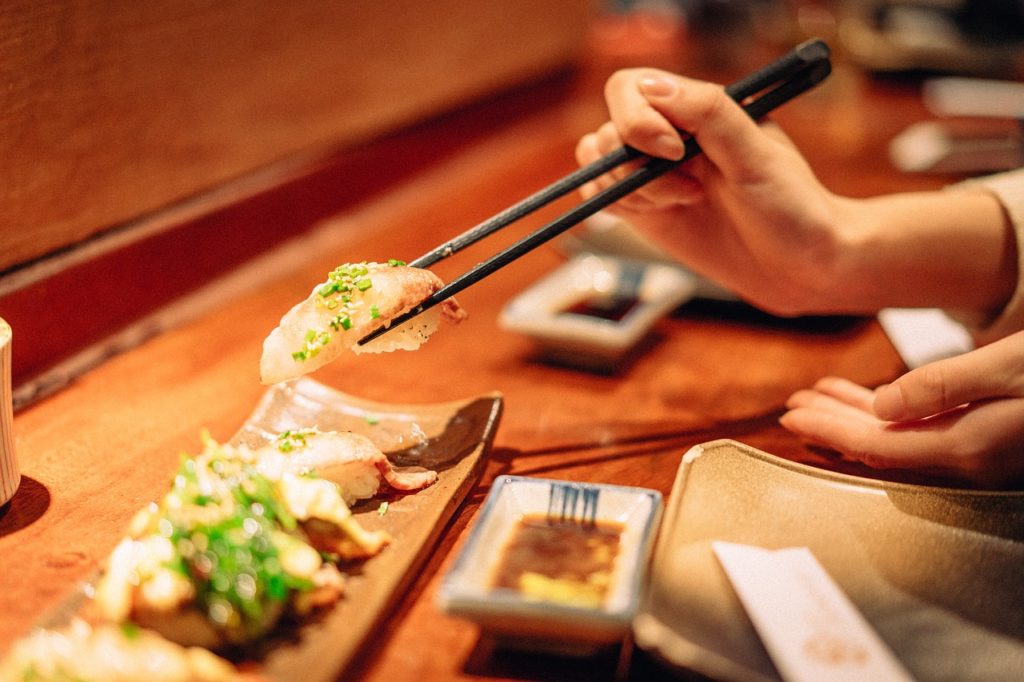
The reason why Japanese do not eat sushi every day is not only because it is too expensive to eat every day. There are many other delicious foods in Japan besides sushi. There are not only Japanese food, but also many other delicious dishes from overseas. There are many restaurants where you can eat a variety of dishes, and there are also many recipes for such dishes on the Internet. Because it is a daily meal, we want to enjoy a variety of delicious foods.
Some people from overseas may have the image that Japanese people eat sushi every day. In reality, however, this is not the case. Even Japanese who eat sushi frequently eat it only two to three times a month.
In Japan, there are many delicious foods other than sushi. When you come to Japan, please enjoy sushi as well as other foods!