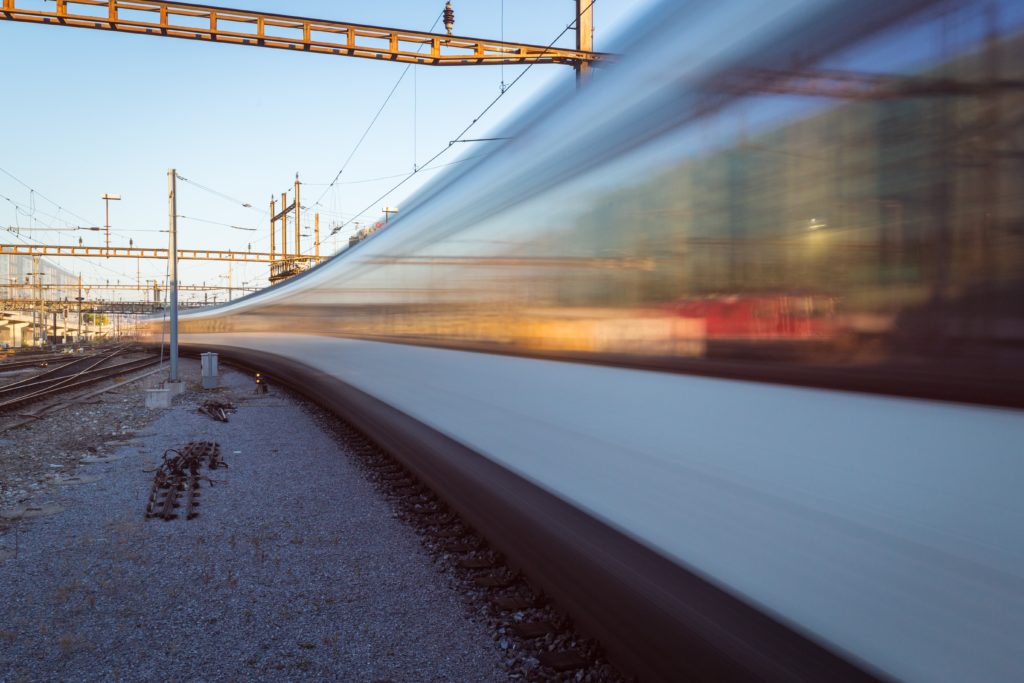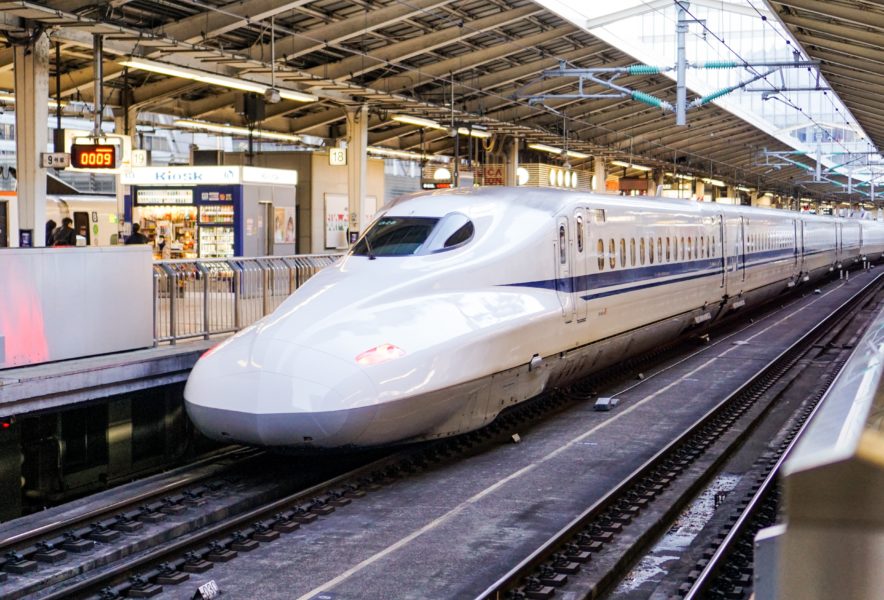
One thing that foreigners who come to Japan always say is “Japanese trains are too difficult! Even Japanese people get lost on trains. To be honest, even Japanese people get lost, and without a transfer search application, it is often difficult to know which train to take. I have found the New York City subway system to be quite complicated, but it seems that Japanese trains are even more so from the perspective of people from other countries. In Japan, various lines cross each other, and some trains come to the same platform but go to different destinations. In Tokyo in particular, it is more convenient to take the train than to drive, but the trains are so complicated.
Why are Japanese trains so complicated that even Japanese people get lost? In this article, we will introduce the origins of Japan’s labyrinthine railroad system and the good parts that are not just complicated.
History and origins of Japanese railroads
Japanese railroads have developed in a complex manner for three main reasons.
Railroad development was prioritized over roads
The first reason is that railroads were prioritized over roads. In other words, there is a history of the Meiji government intentionally developing railroads over roads.
A major factor in this was the urban remodeling that took place after the Meiji Restoration. The transformation of Tokyo into a modern city modeled after the West was an urgent effort to modernize the nation. At that time, Japan and the West had a big difference in the way of thinking about roads and cities, and it was difficult to bridge this gap in a short period of time, so the development of railroads was given priority. In the West, paved roads were quickly developed along with the development of horse-drawn carriages and other forms of vehicular transportation, while Edo was a city with a defensive-oriented urban structure that made it difficult for vehicles to pass through, so it was easier to develop a railroad than to renovate the entire city along with its roads.
Horse-drawn carriage traffic did not develop in Japan.
In the West, roads were increasingly paved to facilitate wheeled traffic, and horse-drawn carriages became widespread. In Japan, however, the use of vehicles was banned by the shogunate, and roads were rarely developed, paved, or maintained. Overland travel in Edo was on foot, and logistics was by waterway. The Meiji government believed that it would be more efficient to modernize Japan by developing railroads, which could transport large quantities of goods at once, than by road in terms of logistics. In addition, steam locomotives had a large visual impact at the time, and were convenient for giving the impression that a new era was coming.
Even in postwar Japan, where the use of automobiles increased dramatically, road construction had not kept pace, and railroads were further developed to fill the gap. As a result, routes grew in length so that any place could be reached by rail, and as a result, it became more complicated.
Multiple railroad companies entered the market.
To develop the railroads as quickly as possible, of course, requires manpower. Several railroad companies were formed to take advantage of the profits, and each company built various routes, which led to the rapid development of the railroads. As a result of the development and growth of each company, a very complicated railroad system was created.
Japanese trains are the most accurate in the world!
Japanese trains are said to be incredibly accurate from a global perspective. They are rarely late, and even when they are, the schedule is immediately changed and the train returns to its original schedule. It is said that the reason for such accuracy is due to the very high level of technology and railroad companies in Japan. The government has focused on the development of railroads rather than roads, and towns have developed along railroads rather than roads.
However, Japanese railroads were not always accurate, and around 1900, schedules were not kept, leading to numerous complaints from passengers who could not make connections or arrive at their destinations on time. Such criticism led railroad companies to take the implementation of on-time operation seriously. In addition to various regulations, employees in departments not directly related to driving were required to carry watches. In addition, the company established landmarks along the route so that the time of passage could be checked, adjusted the details of how to light the coal, cook the coal, and raise the steam, and created a manual to ensure accurate operation. This method of operation spread throughout Japan. With the introduction of electric locomotives in the Showa period (1926-1989), it became easier to adjust train speeds and the operating environment was improved, enabling even more punctual operation.
In Europe and the U.S., driving manuals are generally left to individual drivers, so there are variations from person to person. In Japan, however, the organization as a whole has its own manual, and there is no variation in individual driving. For this reason, Japanese trains are operated very accurately. Incidentally, the average delay time of a train is 0.2 minutes when there is no accident.
Japanese trains and stations are very clean
Japanese trains and stations are very clean. This is due not only to individual passenger behavior, such as not leaving trash on the train and not eating or drinking inside the company, but also to the thorough cleaning efforts of the railroad companies.
For example, Tokyo Metro trains are cleaned by machine every two days. In addition, once every two weeks, a thorough internal and external cleaning and washing operation is carried out by human hands. Cleaners remove not only window panes and door rails, but also removable parts to thoroughly clean every detail. Floors, handrails, and lifts are also carefully polished and disinfected. Seats are cleaned with a vacuum cleaner and broom to remove debris from every nook and cranny, and in some cases, entire seats are removed for cleaning.
In some cases, the entire seat is removed for cleaning. People naturally want to use clean places as they are.
The cleanliness of Japan’s railroads and stations is due, of course, to the individual mindset, but also to the people who work in the shadows.
Is there an extra charge to ride a train?
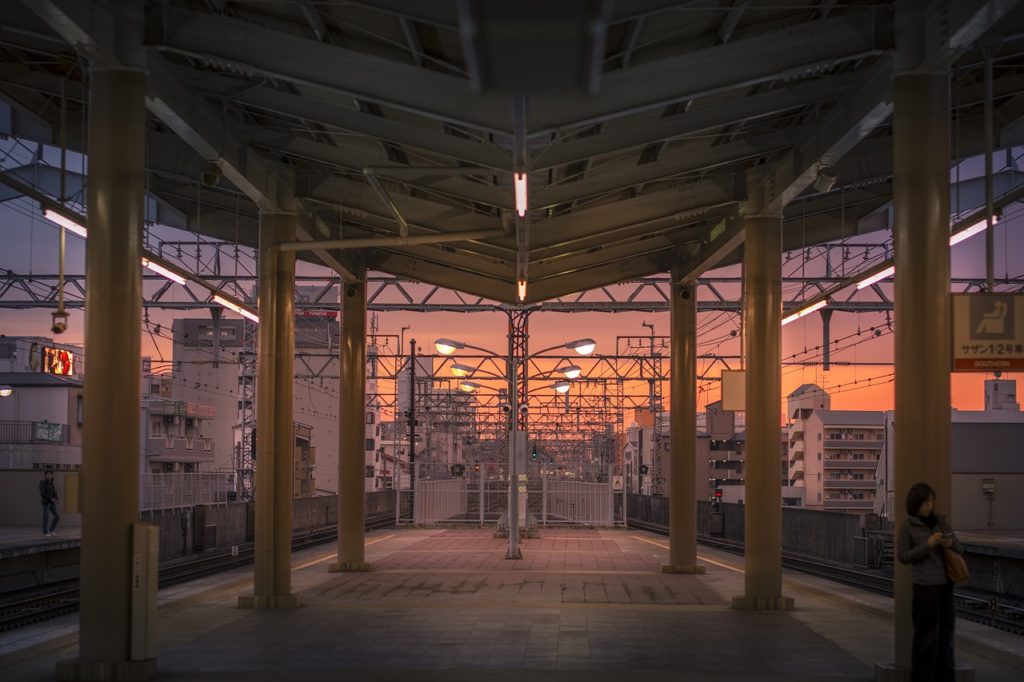
There are several types of trains in Japan, such as ordinary, limited express, and express, and the speed and whether or not there is an additional charge vary. JR and private trains vary in speed, with ordinary and local trains arriving slower and limited express, rapid express, and semi-express trains arriving faster.
In JR, trains are classified in order of speed: limited express, express, limited/rapid/rapid commuter express, and normal. The two fastest trains, limited express and express, require an additional fare. You can save time by using limited express and express trains that stop only at major stations on the same line. If you are traveling long distances by train, such as across a prefecture, it is recommended that you use the limited express or express trains even if you have to spend more money.
Train transfers are complicated even for Japanese people.
When you are in Japan and you are not sure which train to take, it is understandable that you would like to ask for help from the Japanese people around you. However, even for Japanese people, trains are complicated and sometimes confusing. If you are not familiar with a particular section of a train line, you may have a hard time answering the question when asked. If you are having trouble, use a transfer search application or ask a station attendant. Station staff are often knowledgeable about other lines, so they should be able to help you.