
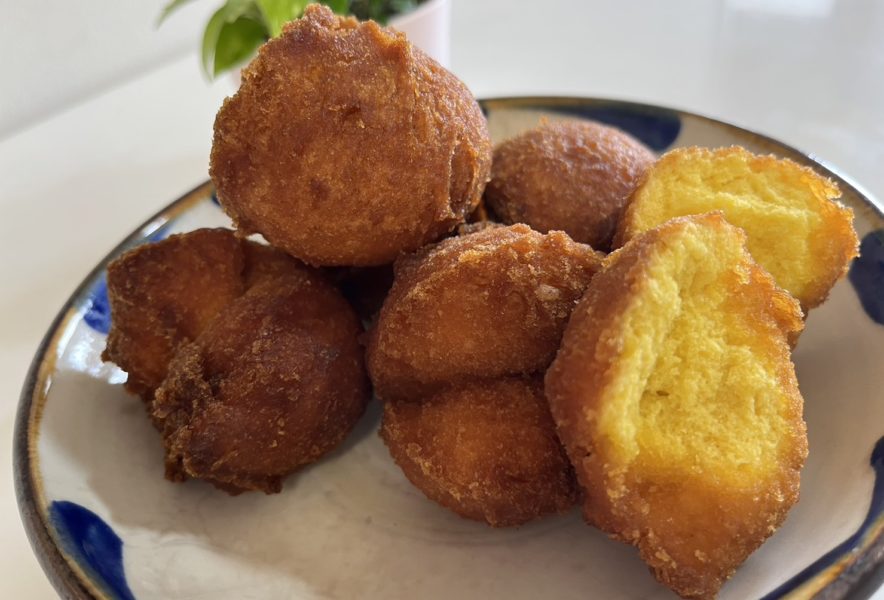
I am KONY, an “Shima Naicha”,(which means the people who moved from mainland Japan and lives in Okinawa) who loves Okinawa very much. It has been 10 years since we moved to Okinawa due to my husband’s job transfer.
Okinawa is filled with a food culture that is different from that of mainland Japan, and this applies not only to the main meals but also to sweets and desserts. When I first moved to Okinawa, I enjoyed Okinawan snacks as a tourist, but now I am able to make them at home.
So, in this article, I would like to introduce “Sataa Andagi” which my son and I, love to eat.
Sataa Andagi = not fried doughnuts?
The most well-known Okinawan snack is probably the Sataa Andagi.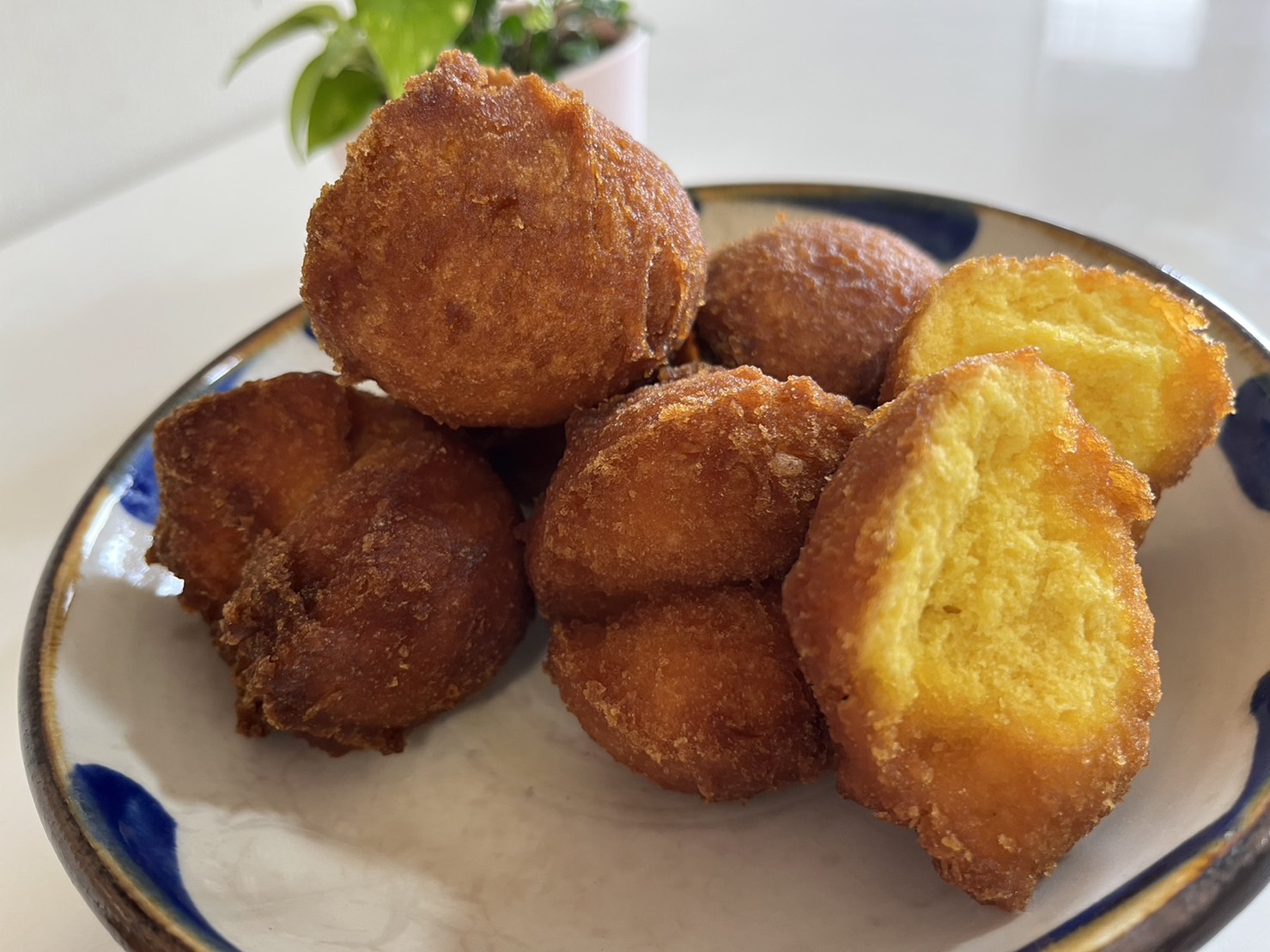
Sataa andagi is a combination of three words from the Okinawan dialect: sataa = sugar, anda = oil, and agi = fried. It is made by rolling out dough like a doughnut and deep frying it in oil.
It is similar to deep-fried doughnuts, but the difference is that the dough for sataa andagi is made without water, while doughnuts are made with water! The appearance of the cracked surface is also a big difference.
Interesting fact is that It has a history of 500 years!
The history of sataa andagi dates back to the dynastic period over 500 years ago. It is said that it was first made by the chefs who studied court cuisine in China after returning to Japan.
It is said that it is similar to a deep-fried Taiwanese pastry called “Kaikou-shou” and was treated as a very luxurious pastry.
Nowadays, sataa andagi is one of the sweets that can be homemade at home. Each family has its own taste, and some people say, “My grandma’s andagi is the best!”
It has been made since the days when sugar was precious, which is why it has long been a favorite taste of Okinawan families.
Sweets to be served at celebratory occasions
Sataa andagi is sold at specialty stores as well as in souvenir corners at airports, and in fact, it is also served at ceremonial occasions such as betrothal parties! The reason for this is hidden in the cooking process of sataa andagi.
When the dough is fried in oil, the dough sinks to the bottom and gradually begins to float. After a while, a portion of the dough breaks off and changes into a tulip-like shape. This appearance “looks like a woman’s smile blooming,” which is why the dough is served as a good-luck charm for betrothal and other occasions!
It is also said to symbolize “prosperity of offspring” because it is a symbol of the union of a married couple and the birth of their child.
When eating sataa andagi, try to think of the smiling faces of your family while eating it.
Recipe
Ingredients (for 12-15 pieces)
Light flour – 150g
1 teaspoon baking powder
1 egg
75g brown sugar
1 teaspoon salad oil
Deep fry oil – to taste
1. Put the egg and brown sugar in a bowl and mix with a whisk. Once mixed, add the salad oil.
2. Sift the flour and baking powder into the bowl and mix with a rubber spatula.
Roll the dough into a ball about 3 cm in diameter. Coat your hands with oil (not included in the amount) to make the dough easier to handle.
Deep-fry the dough slowly in oil at a low temperature of 160℃.
5. Fry for 4 to 6 minutes, and the dough is done when the spheres are cracked and golden brown.
You can make different colors and flavors of sataa andagi by changing brown sugar to white sugar, plain, and some of the flour to red sweet potato powder or pumpkin powder.
The best Sataa Andagi’s shops
Another important feature of sataa andagi is that it varies in flavor and ingredients used from store to store.
Some stores use only white sugar, while others offer a variety of flavors, such as brown sugar, red sweet potato, and pumpkin.
Let us introduce you to our recommended stores in the Naha area and the northern area!
Recommended restaurant in Naha area: Kabocha Andagi Specialty Store “Calabasa”

Calabasa’s sataa andagi was delivered to me by a friend after I moved to Okinawa. I was impressed by the delicious taste! Here at Calabasa, the sataa andagi are small in size and they are “egg-free”!!!!
Since then, I have become a fan of Calabasa’s sata andagi.
I always feel happy when I buy it and eat it with my children at home.
Here is Calabasa’s sataa andagi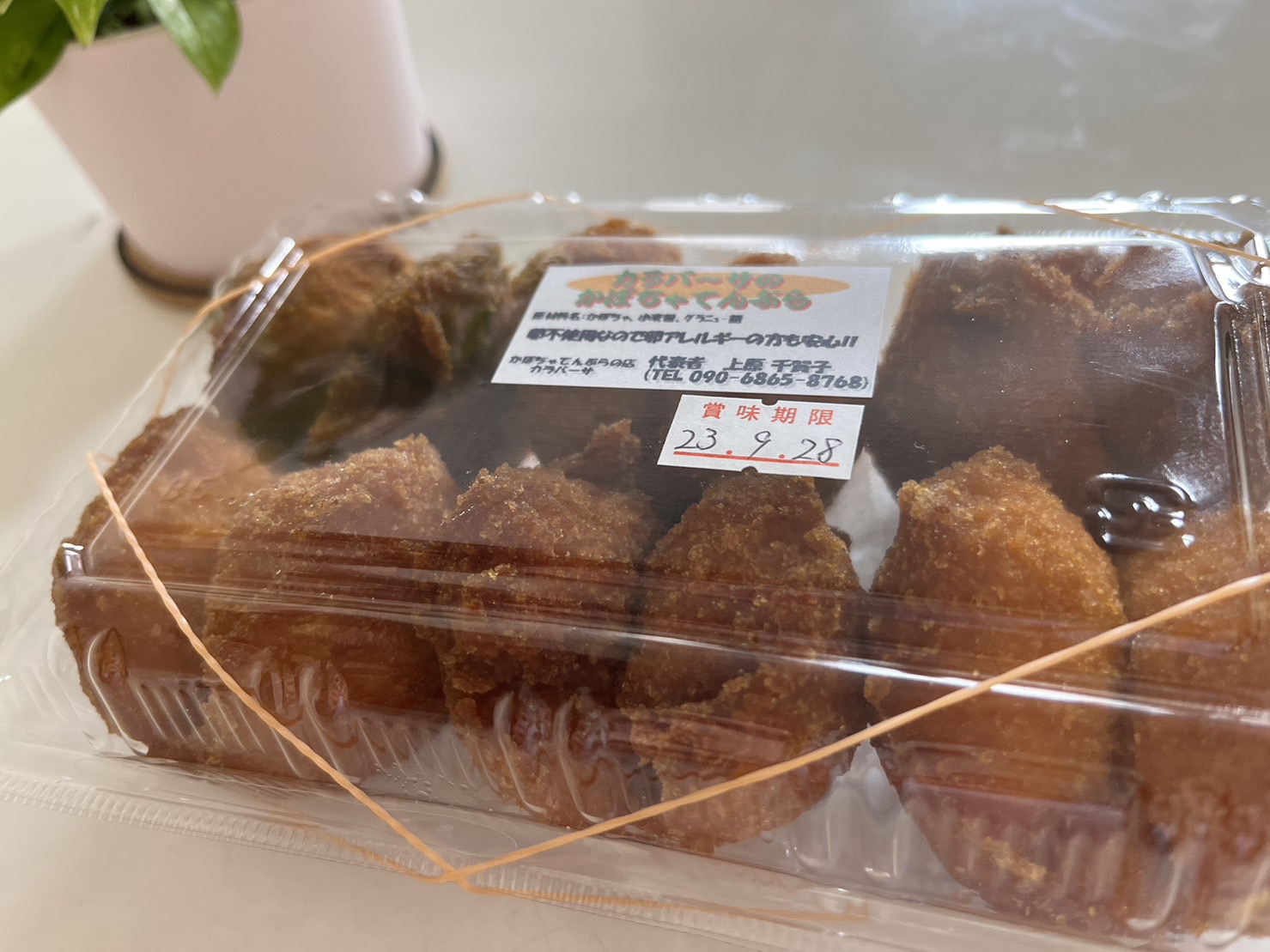
The price is as low as 420 yen for six pieces. It is about half the price of sataa andagi sold at the airport. The three ingredients are pumpkin, wheat flour, and granulated sugar. Even children with egg allergies can eat them with no worries.

The good old Okinawan style store can be missed if you don’t look carefully. The store is not a large store with a retro Showa-era feel, so be sure to check the area around the store when you get there!
Calabasa’s sataa andagi has many fans, and they can be sold out by 3:00 p.m. On the day I visited, there were about three people lined up outside.
Since this is a small store, I encourage you to call the store before purchasing. They also accept layaway reservations, so if you really want to buy something, I recommend you make a reservation beforehand.
Kabocha andagi specialty store “Calabasa”
Address: 3-20-1 Kohagura, Naha City, Okinawa Prefecture
Phone: 098-868-5387
Business hours: 10:30 – 18:00 (The shop closes as soon as it runs out. Sometimes sold out by 3:00 p.m., so early arrival is recommended.)
Closed: Sundays (some other days may be closed, so it is best to call to confirm)
Parking: Not available (coin-operated parking is available nearby)
▶︎ By public transportation
About 30 minutes from Naha Airport.
From the domestic terminal, board a bus bound for Naha Bus Terminal 83. Get off at Kohakura and walk about 1 minute.
▶︎ By car
Approximately 15 minutes from Naha Airport.
Take National Route 332 and Prefectural Route 7 to Chiyomasa Mansion.
Recommended store in the northern area: Mitsuya Honpo Onna Ten
”Mitsuya Honpo ” is a must stop before you go sightseeing in the northern area of the main island. It is a store specializing in sataa andagi located in the Onnason area, where a beautiful beach lies just below.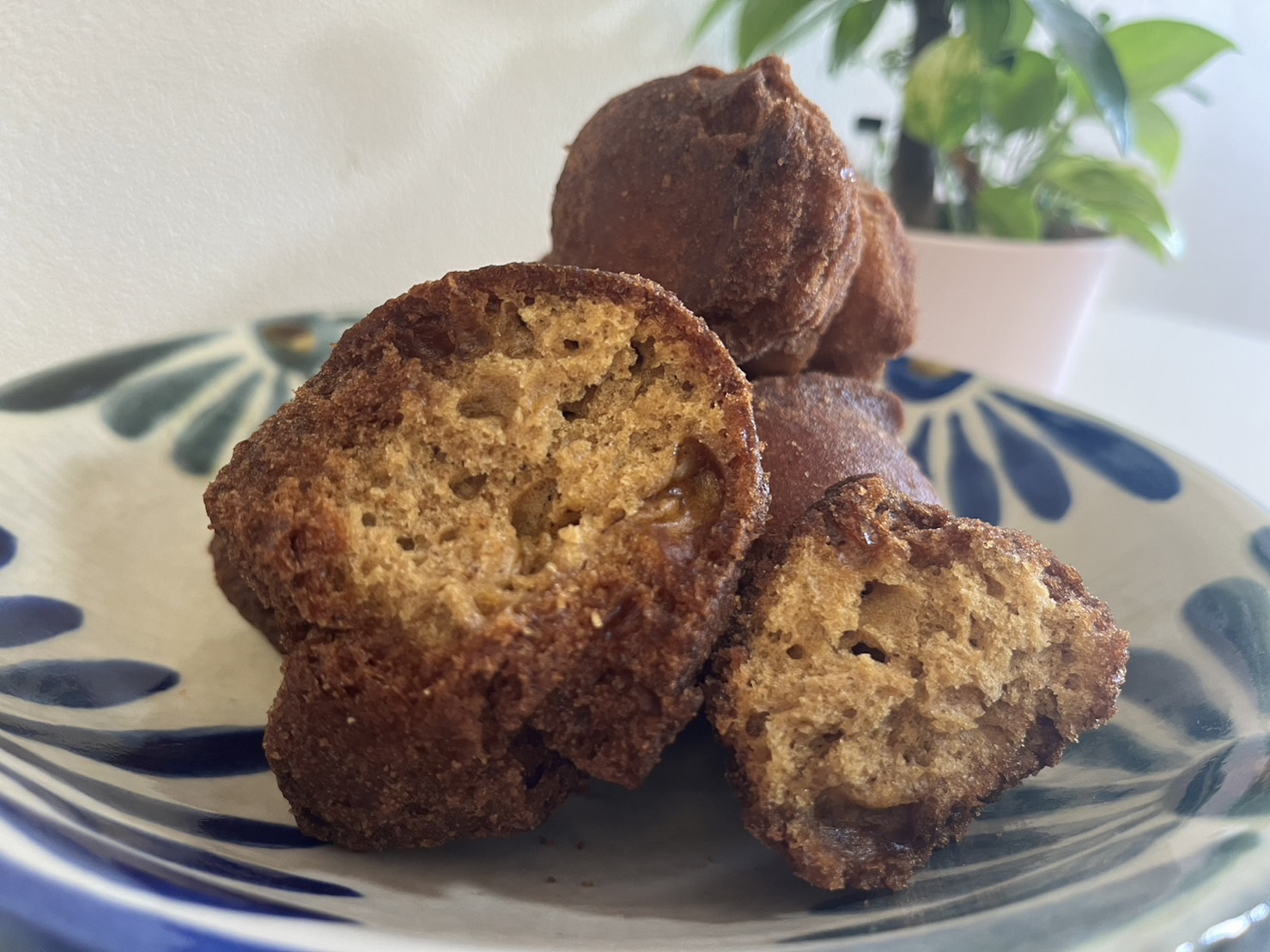
“Mitsuya Honpo’s” sataa andagi comes in a variety of flavors, including brown sugar, red sweet potato, salted sesame, chocolate, pumpkin, etc. Me, KONY, prefers the brown sugar flavor, but my son prefers the red sweet potato flavor.
You can also eat in and watch the frying process. I recommend you to take your time to watch the frying process, and try the freshly fried, freshly cooked food.
Mitsuya Ball (a.k.a. Dragon Ball), sold in limited quantities of 100 at Mitsuya Honpo, are also popular. The dough is made of tapioca flour, which gives the balls a softer, firmer texture than sataa andagi!
They are very popular and sometimes sold out if you don’t show up early. If you really want to try it, it is recommended that you ask them to reserve it for you.
“Mitsuya Honpo” has not only the Onna store but also other stores. Please stop by the store near you.
▶︎The official website for “Mitsuya Honpo” stores can be found here: https://mitsuyahonpo.hp.gogo.jp/sp/index.html
Mitsuya Honpo Onna Ten
Address: 2572-2, Onna Aza, Onnason, Kunigamigun, Okinawa Prefecture
Phone: 098-966-8631
Business hours: Weekdays 10:00-17:30 / Weekends and holidays 10:00-18:00
Closed: No holidays (except for year-end and New Year holidays)
Parking: Available (about 3 cars can be parked next to the store)
▶︎ By public transportation
About 2 hours from Naha Airport. Take the “120” bus from the domestic terminal bus. Get off in front of Onnason Hall and walk about 1 minute.
▶︎ By car
It takes about 1 hour from Naha Airport via Okinawa Expressway by car.
Exit at the Yaka Interchange on the Okinawa Expressway and drive about 6 km via Prefectural Route 88 and Onna Sunset Kaido.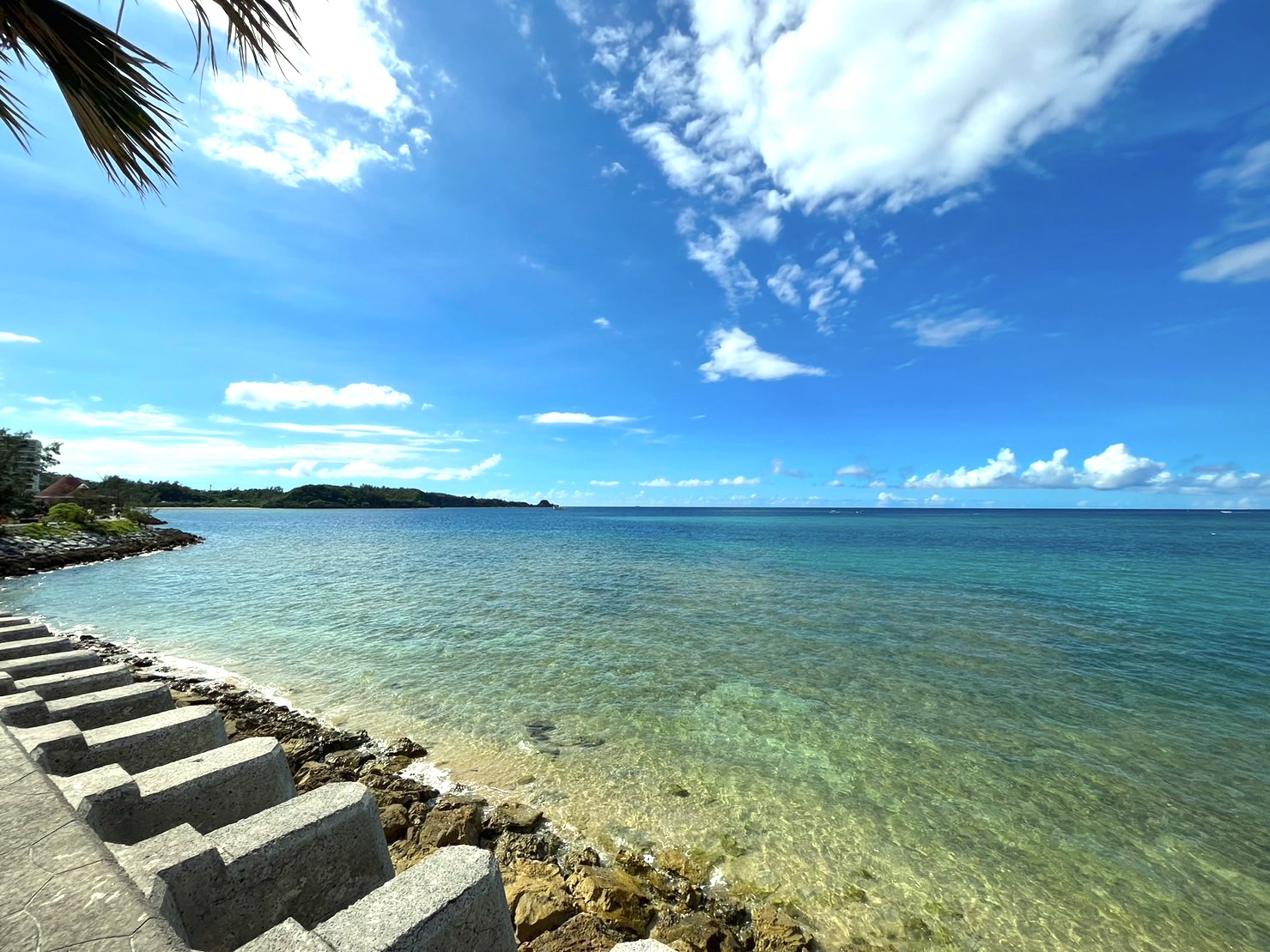
I had been always looking forward to eating sataa andagi in Okinawa after moving here. The reason is that I could not forget the taste of the freshly fried, crispy, fluffy sata andagi I had at Sanya Honpo when I stopped by on a trip.
Unfortunately, my home and Onnason are too far apart for me to visit there easily, so now I make my own sataa andagi for my children’s snacks.I wish someday I would like to have my children to say, “Mom’s sataa andagi is the best sataa andagi I’ve ever tasted!”
You can buy “sataa andagi mix” (just like pancake mix) at souvenir stores, so you can enjoy the taste of freshly fried sataa andagi at home after your trip!
Written by KONY
Translated by Rie
